

Junior Engineers & STEAM Lab
(Ages 4–5)
Program Structure: 10 Comprehensive Modules
Module Duration: 2 Months Per Module (8 Weekly Sessions)
Class Format: One 60-Minute Session Per Week
Tuition: $XX / Month (Includes 4 Premium Hands-On Classes & All Materials)
Say Hi!
info@mindupny.com
Let's Talk
15513469743
MODULE 1: Electricity & Circuits
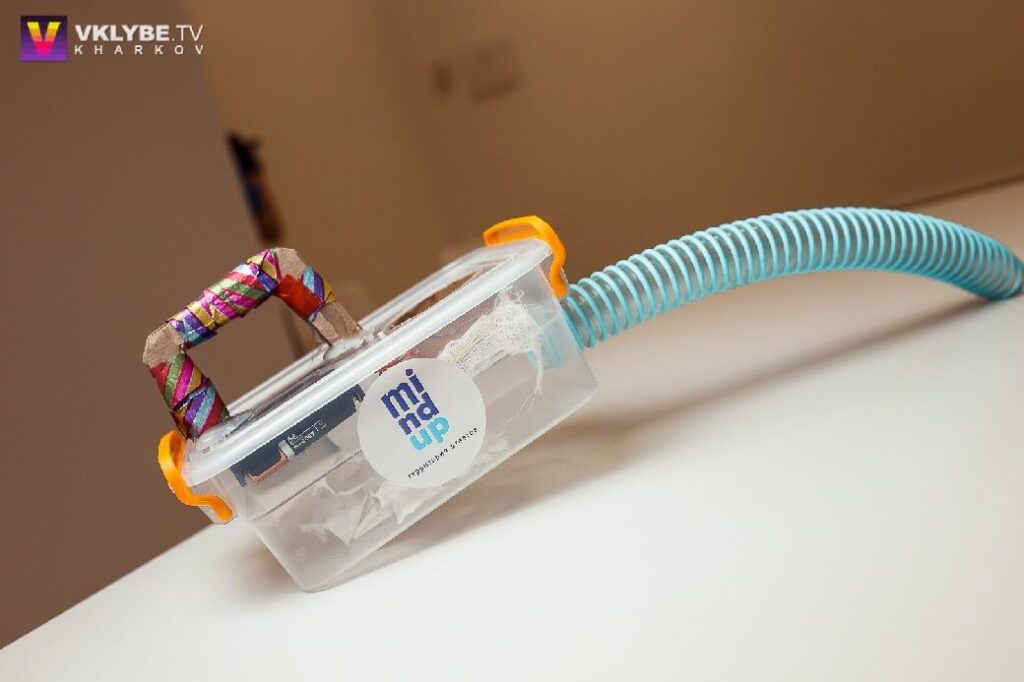
Engineering Project: The Working Vacuum Cleaner
We create a welcoming, high-energy environment from the very first minute, captivating children with an incredible, custom-built mechanism—their own vacuum cleaner! Students build this device entirely by themselves and get to take it home at the end of the 8-session module.
During this introductory module, our educators gently assess each child’s focus and scissor skills, ensuring a smooth, joyful adaptation to the lab.
Key Concepts: Introduction to battery types, everyday appliances, and electrical safety.
Hands-on Experiments: Exploring magnetic poles, understanding positive (+) and negative (–) battery terminals, and discovering terms like electrical circuit, prototype, and insulating tape.
MODULE 2: Optics & Light
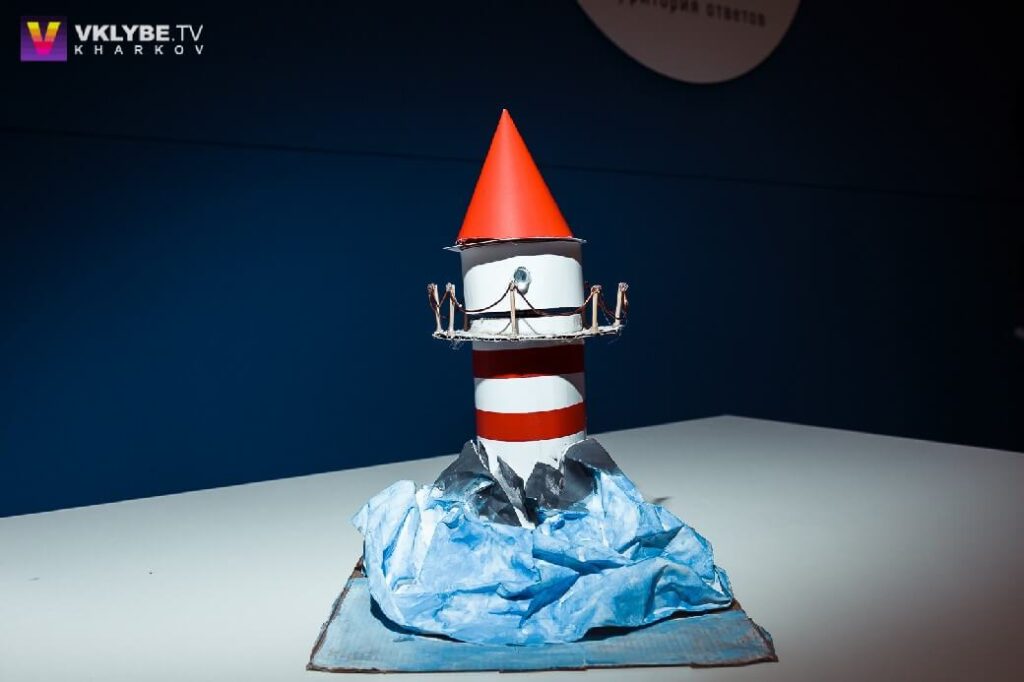
Engineering Project: The Magical Lighthouse
In this module, young scientists explore the fascinating world of light and its sources. They discover how lenses work, learn about optical instruments, and build their very own tools—including a custom magnifying glass and a kaleidoscope!
Children experience immense pride using their handmade magnifying glasses to investigate the room like little explorers.
Key Concepts: Developing scientific curiosity, using real microscopes (e.g., examining onion cells), and understanding UV light (including how to spot counterfeit money).
Engineering Focus: Assembling a fully functional lighthouse prototype. Kids learn how a motor works, how to connect it, and how to wire a complete electrical circuit.
MODULE 3: Mechanics & Motion
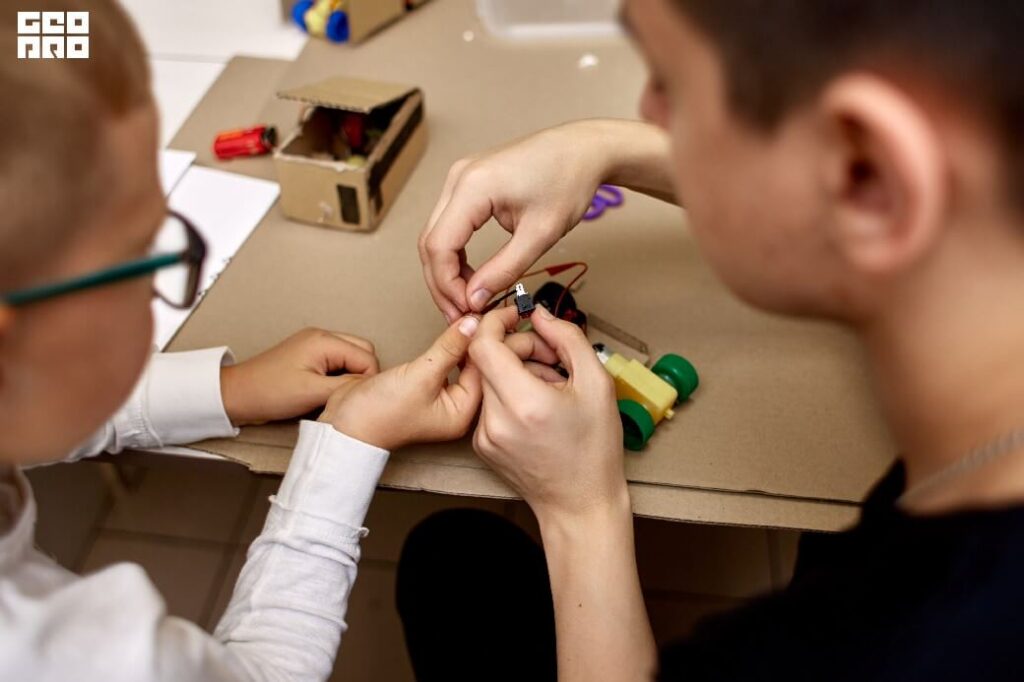
Engineering Project: The Electric Locomotive Train
Mechanics is the science of how things move through space. To visualize this, every child designs a custom marble maze from everyday materials to observe gravity and motion in action.
We encourage critical thinking by asking: “What is a machine? Where do we see them, and how do they help humanity?”
Key Concepts: Designing non-electrical simple machines using buttons, wooden sticks, cardboard, skewers, and rubber bands.
Hands-on Fun: Building a working catapult prototype to launch safe projectiles in a fun friendly competition, while learning the history of ancient siege engines.
Engineering Focus: Wiring an electrical circuit for a train, crafting custom wheels and chassis, and building a second connected train car. We trace the evolutionary history of trains from steam and diesel to modern electric locomotives.
MODULE 4: Anatomy & Bio-Engineering
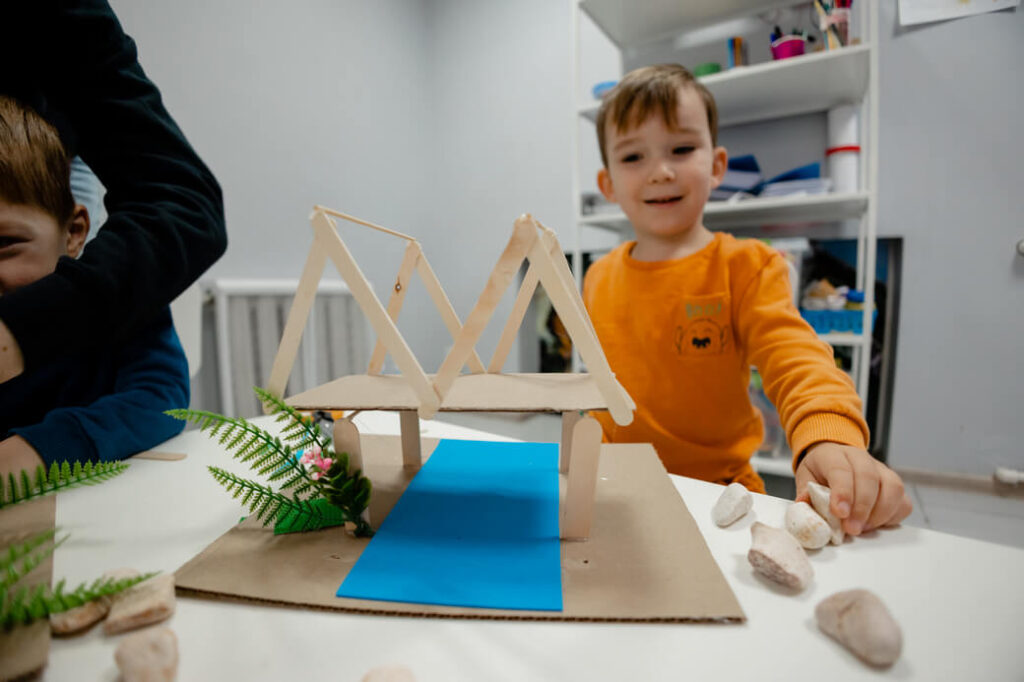
Engineering Project: Personal Humidifier & Organ Models
We discover the human body in a whole new way—not from dry textbooks, but through interactive models, experiments, and careful observation. Children build 3D organ models to understand how the heart pumps, where air goes when we breathe, and why our five senses are ultimate superpowers for exploring the world.
Key Concepts: Building a functional model of the heart based on hydraulics to see how “blood” pumps through veins and arteries.
Wow-Moments: Creating a model of the lungs integrated with an electrical circuit to show how complex alveoli oxygenate our blood.
Sensory & Medical Science: Exploring sensory receptors and how they signal the brain. Students also experience a “junior doctor” session where they learn to apply medical casts, study real human and animal X-rays, and explore the skeletal system.
Engineering Focus: Building an automated air humidifier, connecting health, environmental comfort, and engineering.
MODULE 5: Eco-Tech & Botany
Engineering Project: The Illuminated Water Fountain
This module bridges engineering with the natural world. Children plant bean seeds, nurturing and tracking their growth over time. They explore the unique flora of Antarctica and conduct tasks using real, living moss.
Key Concepts: Survival mechanics in nature. Through a controlled experiment with wax candles and fire, kids discover how cacti survive in deserts (water storage roots, waxy coatings, protective needles, and shade adaptations).
Environmental Science: Exploring water filtration. Students build a custom water filter using bottles, stones, and soil, while learning why tap water requires filtration.
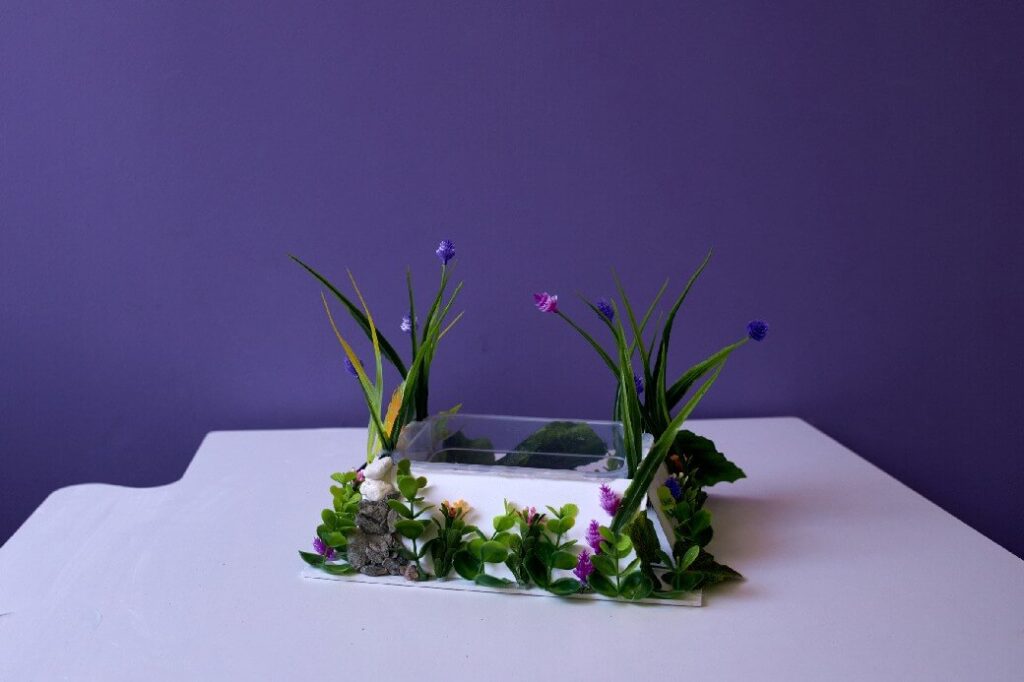
Engineering Focus: Combining tech with nature by assembling and decorating an electric water fountain using natural stones and faux greenery, while discussing water ecology and oxygen production on Earth.
MODULE 6: Dino-Engineering & Paleontology
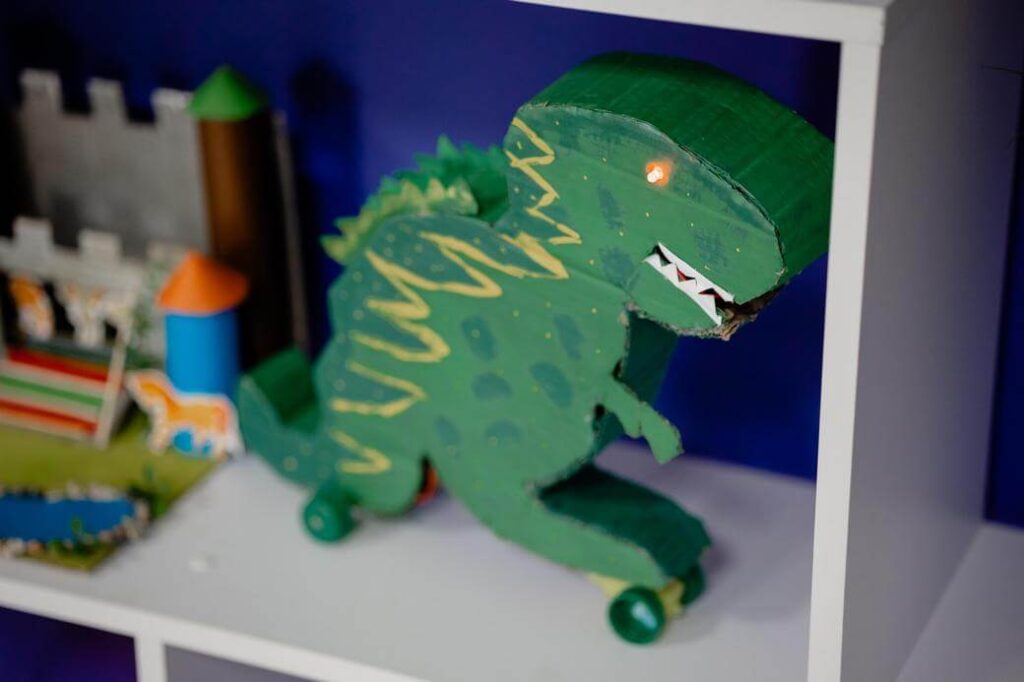
Engineering Project: The Motorized Walking Dinosaur
Dinosaurs meet robotics! Over 8 sessions, children build an electric dinosaur that moves forward and features glowing red LED eyes.
Key Concepts: Diving into prehistoric eras, categorizing herbivores vs. carnivores, and playing educational paleontology games.
Hands-on Science: Acting as real paleontologists! Children cast dinosaur fossils and bones out of clay, assemble complete skeletons, and explore extinction theories. They will answer the ultimate question: “Do dinosaur relatives still live among us today?”
Creative Crafting: Using specialized yarn and glue techniques to create prehistoric dinosaur eggs, channeling a child’s natural love for dinosaurs into an immersive learning experience.
MODULE 7: Aerospace & Mars Exploration
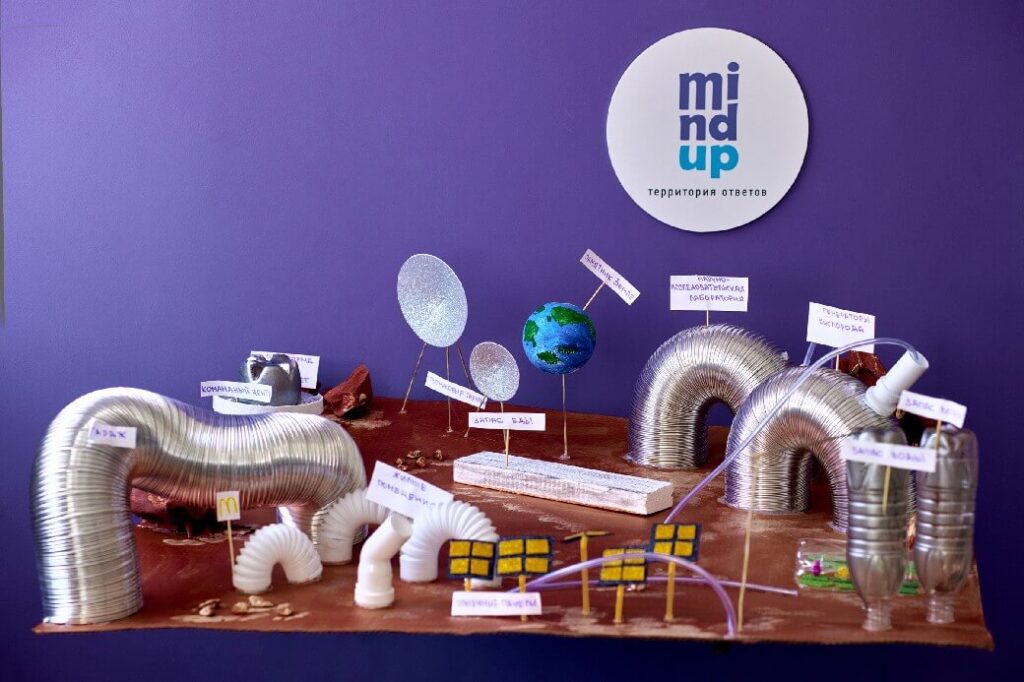
Engineering Project: The Motorized Mars Rover
Mission to Mars! This module is dedicated to space exploration, celestial objects, and aerospace mechanisms. Students start by launching mini-rocket prototypes engineered from sponges, cups, and balloons.
Key Concepts: Learning how space stations generate oxygen, how spacecraft wings are designed, and what astronaut spacesuits are made of.
Engineering Focus: Assembling a motorized Mars Rover powered by a gear-motor. Children map out, connect, and safely learn introductory wire-joining/soldering techniques for the electrical circuit.
Creative Design: Building a 3D Martian surface and designing a futuristic space colony, while discussing sustainability challenges on Earth.
MODULE 8: The Science of Transparency
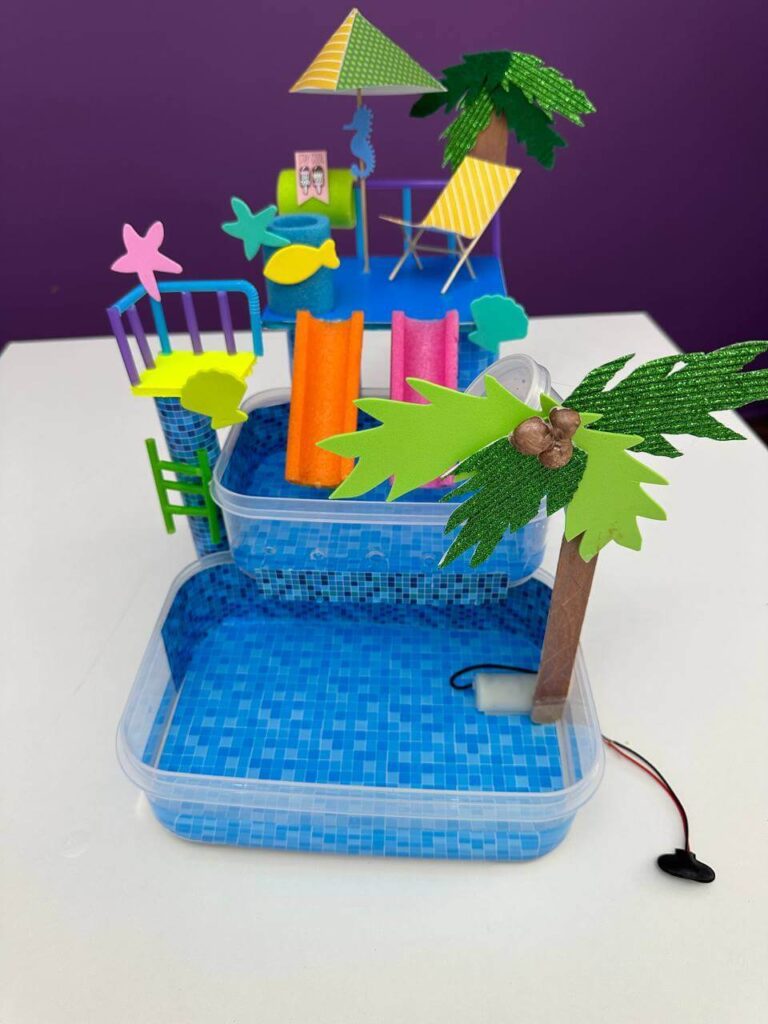
Engineering Project: The Two-Story Water Park
Transparent objects unlock a fantastic world where we can see through matter. This module introduces the concepts of transparent, translucent, and opaque materials.
Key Concepts: How humanity utilizes transparency—from medical X-ray machines to thermal imagers that detect heat signatures through walls.
Historical Tech: Discovering how copy machines and old-school carbon paper worked before digital printers existed.
Sensory Experiments: Working with glass, water, crystals, plastics, and tracing paper to explore light filters and stained-glass artwork.
Engineering Focus: Designing a trendy, transparent, two-story miniature water park model featuring a functional lemonade dispenser, complete with a fun imaginative twist on “Ghostbusters” science.
MODULE 9: STEAM & Steampunk Art
Engineering Project: The Steampunk Creative Factory
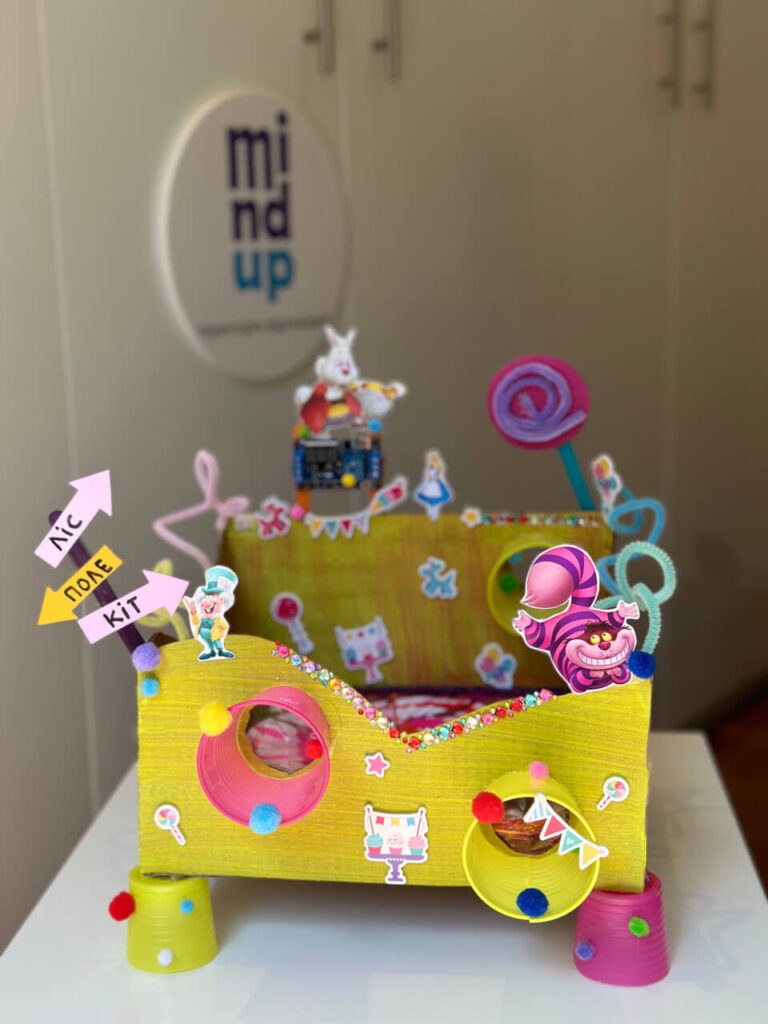
This module introduces students to modern movements in contemporary art: body art, street art, upcycled “dump” art, and fan art. We step into a whimsical world inspired by Alice in Wonderland, crafting custom clocks to learn time-tracking.
Key Concepts: Master the unique technique of water marbling (Ebru), creating intricate floating patterns on water and transferring them onto paper and textiles.
Engineering Focus: Building an ultra-modern “Creative Factory” inspired by the Steampunk aesthetic—blending 19th-century industrial machinery concepts with futuristic mechanics and gears.
MODULE 10: Expedition X & Coordinates
Engineering Project: The Working Metal Detector
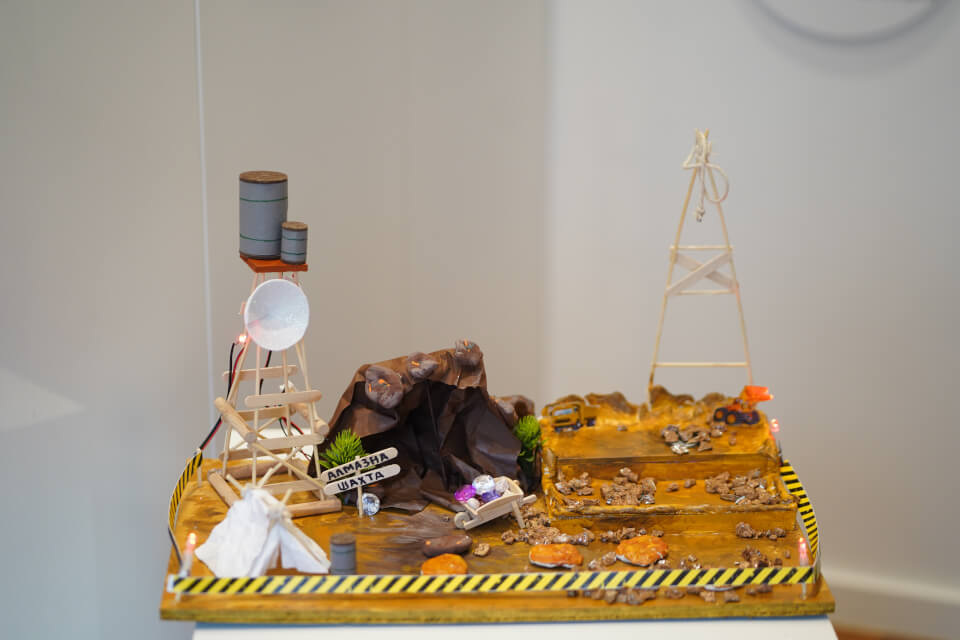
A real expedition for curious minds! To reach “Point X,” children must master map navigation, cardinal directions, and compass mechanics. Instead of just looking at a compass, they build one from scratch to test magnetic forces.
Key Concepts: Understanding coordinate grids, locating points on a map, and learning how lines of latitude and longitude intersect.
Archaeology Lab: Discovering ancient artifacts. Children transform into junior archaeologists to excavate, analyze ancient ornaments, and sculpt/paint their own clay vases.
Engineering Focus: Designing a fully functional electrical metal detector to locate hidden metals in the soil, mastering series connections and practical physics along the way. We conclude with vital discussions on Earth’s natural resources and global conservation.
Ready to Spark Your Child’s Inner Engineer?
Spaces in our hands-on STEAM Lab fill up quickly. Book a trial session today and watch your little scientist wire their very first working circuit!